Back pain that radiates, worsens with movement, or limits daily activity often signals disc irritation that requires targeted, regenerative care—not just temporary symptom control.


What Is a Herniated Disc?
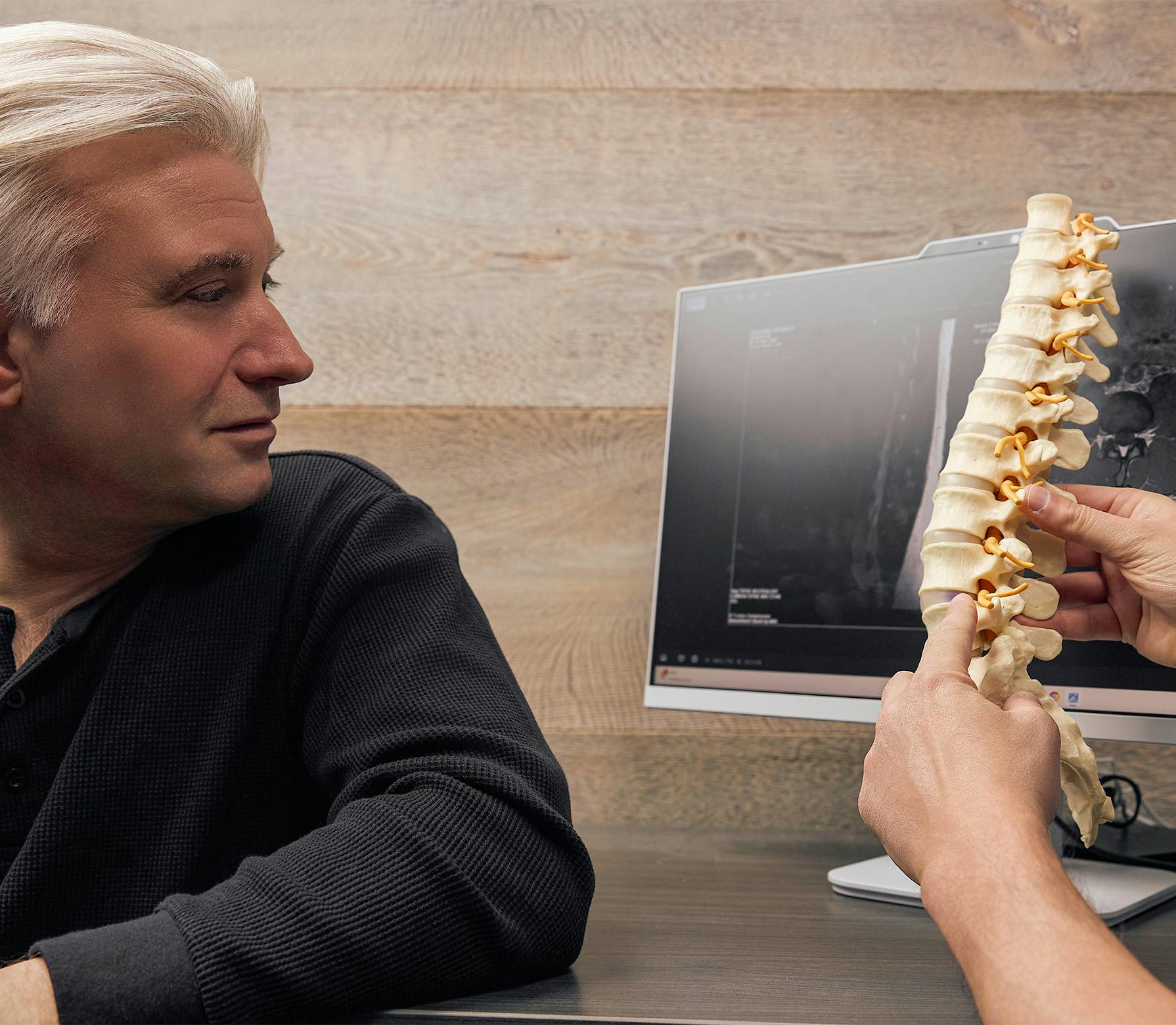
A herniated disc occurs when the soft inner portion of a spinal disc pushes through the tougher outer layer. This protrusion can irritate or compress nearby spinal nerves, resulting in localized pain or symptoms that travel into the arms or legs.
Herniated discs most commonly affect the cervical (neck) and lumbar (lower back) spine, though symptoms and severity vary depending on the disc involved and the degree of nerve irritation. While some herniated discs improve with time, others cause ongoing pain that interferes with daily life and activity.