Regenerative Care That Reaches Beyond the Joint Surface

Chronic joint and spine pain often runs deeper than the cartilage or ligament where it appears to start. Subchondral bone, the layer just beneath the joint surface, plays a critical role in load distribution, pain signaling, and disease progression. The same is true of the vertebral bone in the spine, where bone marrow changes can drive persistent back pain.

Intraosseous therapy is the advanced regenerative approach that targets these structures directly. At Regen Axis Health, intraosseous PRP and bone marrow aspirate concentrate (BMAC) procedures are performed by board-certified physicians under image guidance, anchored by Dr. Leon Reyfman's fellowship training in interventional pain and his academic leadership at Mount Sinai and SUNY Downstate.

What Is Intraosseous PRP and BMAC Therapy?

Intraosseous therapy delivers regenerative biologic material directly into bone, rather than into a joint space or soft tissue. The treatment usually combines two components:

Platelet-Rich Plasma (PRP)

Drawn from the patient's own blood, PRP is concentrated to deliver platelets and growth factors that influence inflammation and tissue repair.

Bone Marrow Aspirate Concentrate (BMAC)

Collected from the patient's pelvis and processed to concentrate mesenchymal stem cells, growth factors, and signaling molecules.

Once prepared, the biologic material is injected into the targeted bone, the subchondral bone beneath a damaged joint, or the vertebral bone associated with spine-related pain, using ultrasound or fluoroscopic guidance.

Background media

Why Treat Joint Pain at the Bone Level?

In many joint and spine conditions, structural and inflammatory changes occur within the bone itself. Subchondral bone marrow lesions, visible on MRI, are closely associated with osteoarthritis pain. Vertebral bone marrow changes can drive chronic low back pain that does not respond to disc, facet, or ligament-focused treatments.

Surface-level injections, delivered only into the joint space or soft tissue, often cannot reach these deeper pain generators. Intraosseous therapy is designed to treat the bone directly. Peer-reviewed research has shown that combining intraosseous and intra-articular PRP can outperform intra-articular PRP alone in patients with severe knee osteoarthritis.

doctor examining a patient

How Intraosseous PRP and BMAC Differ From Other Joint Treatments

Most joint and spine injections target soft tissue, the joint space, or a nerve. Intraosseous therapy goes a step further:

  • It addresses the bone, not just the surrounding structures
  • It uses autologous biologic material drawn from the patient's own body
  • It avoids steroids and synthetic medications
  • It targets the structural and inflammatory contributors to chronic pain

For patients with moderate to advanced degeneration, persistent pain after surface-level care, or imaging that shows bone-related changes, intraosseous treatment can offer a deeper level of regenerative care.


Conditions Treated With Intraosseous Therapy at Regen Axis Health

Intraosseous PRP and bone marrow treatment may be appropriate for patients with joint conditions involving bone-related degeneration or pain, including:

  • Moderate to advanced osteoarthritis
  • Joint degeneration with bone marrow edema on imaging
  • Chronic knee, hip, or shoulder pain
  • Persistent joint pain not responding to intra-articular injections
  • Post-injury joint degeneration involving the underlying bone

A thorough evaluation is required to determine whether intraosseous treatment is appropriate for a specific joint.

Banner media

How Intraosseous PRP and BMAC Therapy Works

Healthy joints rely on strong, well-functioning bone beneath the cartilage to absorb force and maintain stability. When subchondral bone becomes inflamed or weakened, pain signals increase and joint mechanics suffer.

Intraosseous PRP and BMAC therapy introduces regenerative cells and growth factors directly into the bone. These biologic signals may help regulate inflammation, support bone health, and improve the joint’s internal environment.

Because this process works at a biologic level, improvement is typically gradual and progressive rather than immediate.

Who Is a Candidate?

Patients who may benefit from intraosseous therapy include those who have chronic joint or spine pain with evidence of bone involvement, have not achieved lasting relief from surface-level joint or spine injections, want to avoid or delay joint replacement or spinal fusion, are medically appropriate candidates for autologous biologic therapy, and are seeking a more comprehensive regenerative approach.

Contact us media

“Dr. Reyfman's expertise in spine injections has helped me immensely with my chronic back pain. He was able to quickly diagnose the source of my pain and provide much-needed relief through his innovative treatments.”

Jacqueline Caspi

Contact us media

How Intraosseous PRP and BMAC Is Performed

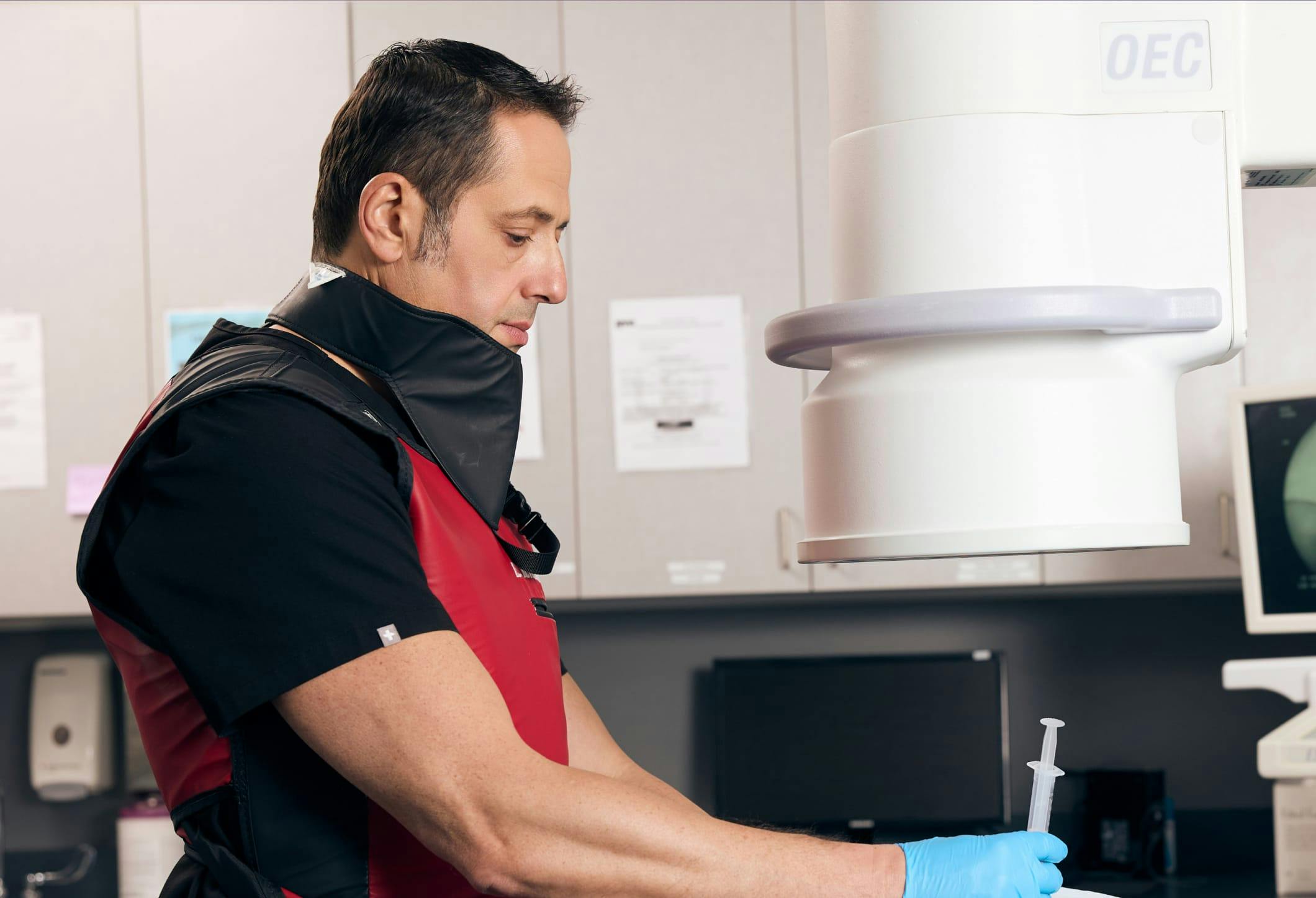
Intraosseous treatment is a same-day, outpatient procedure performed under sterile conditions. After collecting blood for PRP and bone marrow for BMAC using minimally invasive techniques, the samples are centrifuged to concentrate the biologic components. Local anesthesia is applied, and image guidance is used to access the targeted bone. From there, PRP and BMAC are precisely delivered into the subchondral or vertebral bone region. Brief post-procedure monitoring and recovery guidance follow.

Patient comfort, accuracy, and safety guide every step. Most patients return home the same day, with walk-in and same-day appointments available across our 16 New York and New Jersey locations.

What to Expect After Intraosseous Treatment

Temporary soreness, pressure, or mild swelling in the treated area is common during the first several days. Because intraosseous therapy works through biologic signaling and structural change within the bone, improvement is gradual.

Activity restrictions during the early recovery period help protect the treated bone. A guided return to movement supports the long-term healing response.

Background media

Combining Intraosseous Therapy With Other Regenerative Treatments

Intraosseous PRP and BMAC are often combined with intra-articular PRP, MFAT, ozone therapy, shockwave therapy, regenerative laser therapy, or photomodulation. The combination depends on the diagnosis, imaging findings, and patient goals.

This layered approach allows Regen Axis Health to address joint and spine pain at every level—bone, cartilage, ligament, and surrounding soft tissue—rather than relying on a single intervention.

Results of Intraosseous PRP and Bone Marrow Treatment

Outcomes depend on the area treated, the severity of degeneration, and the individual healing response. Many patients experience reduced pain, improved joint stability, and greater tolerance for daily activity.

Because intraosseous therapy targets deeper structural contributors, improvement often continues to develop over several months following treatment.

rain drops on a puddle
Doctor media

Why Choose Regen Axis Health?

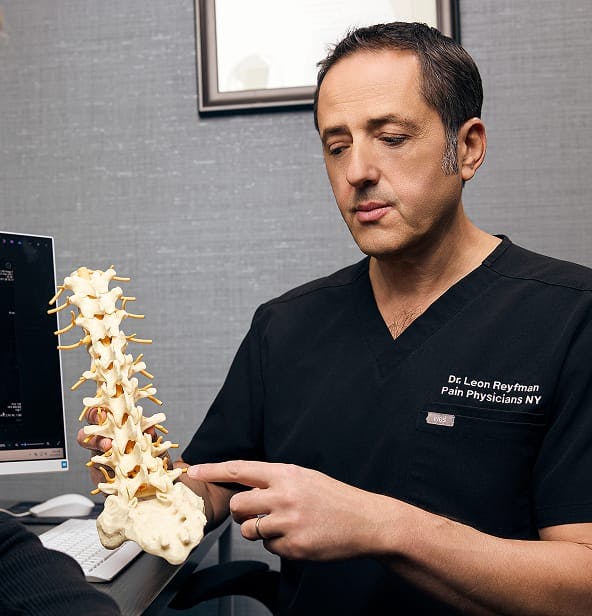
Intraosseous treatment requires advanced training, technical precision, and a deep understanding of joint and spine anatomy. Dr. Leon Reyfman, board-certified in Anesthesiology and Pain Management, fellowship-trained at Columbia University, and an Attending Physician at Mount Sinai, brings that expertise to every case. Alongside him, Dr. Dvoskin, Dr. Kosharskyy, Dr. Shulkin, Dr. Elbaz, Dr. Cohen, and Dr. Koutsospyros offer the same standard of board-certified, image-guided care.

Every intraosseous procedure at Regen Axis Health is performed by a physician, using ultrasound or fluoroscopy, within a care model built around joint and spine preservation. With 16 locations across New York and New Jersey, advanced regenerative care is accessible without long delays.

Schedule an intraosseous PRP and BMAC consultation with Regen Axis Health today.

Frequently Asked Questions Intraosseous PRP and Bone Marrow Therapy

How Does Intraosseous Treatment Differ From a Standard Joint Injection?

Standard injections deliver medication or biologics into the joint space. Intraosseous therapy delivers regenerative material into the bone beneath the joint—or into the vertebral bone of the spine—where surface-level injections cannot reach.

Is Intraosseous PRP and BMAC Therapy Painful?

Most patients tolerate the procedure well. Local anesthesia is used at the collection and injection sites. Temporary soreness is common but typically short-lived.

Can Intraosseous Therapy Be Used in the Spine?

Yes. In select cases, intraosseous treatment is used to address pain associated with vertebral bone changes. Imaging and clinical evaluation guide the decision.

How Long Does It Take to See Results?

Improvement is gradual. Many patients notice changes within several weeks, with continued progress over the following months as the bone and surrounding tissues respond.

Can This Treatment Help Me Avoid Surgery?

In some cases, yes. By targeting the bone-level contributors to chronic pain, intraosseous PRP and BMAC may help delay or eliminate the need for joint replacement, spinal fusion, or other surgical interventions.

Contact us media
Accessibility: If you are vision-impaired or have some other impairment covered by the Americans with Disabilities Act or a similar law, and you wish to discuss potential accommodations related to using this website, please contact our Accessibility Manager at (212) 235-1599.
Contact Us