Regenerative Care That Supports Joints, Discs, and Spinal Ligaments

Chronic musculoskeletal pain rarely comes from a single source. Cartilage, bone, ligaments, and intervertebral discs all degrade in their own way, and traditional injections often treat only the surface of the problem.

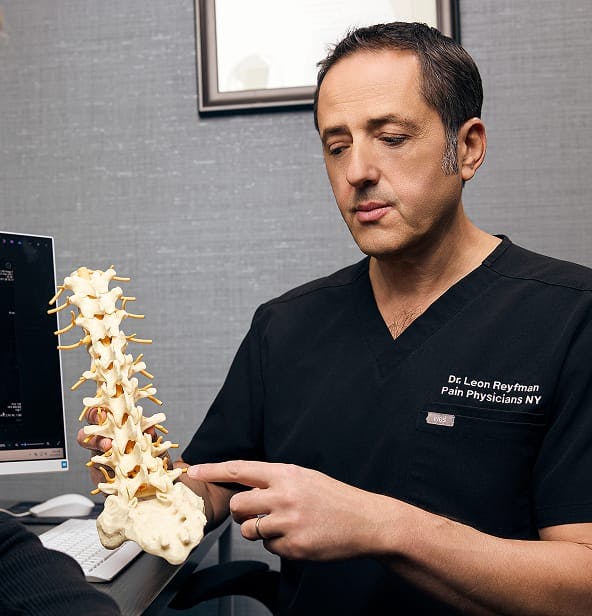
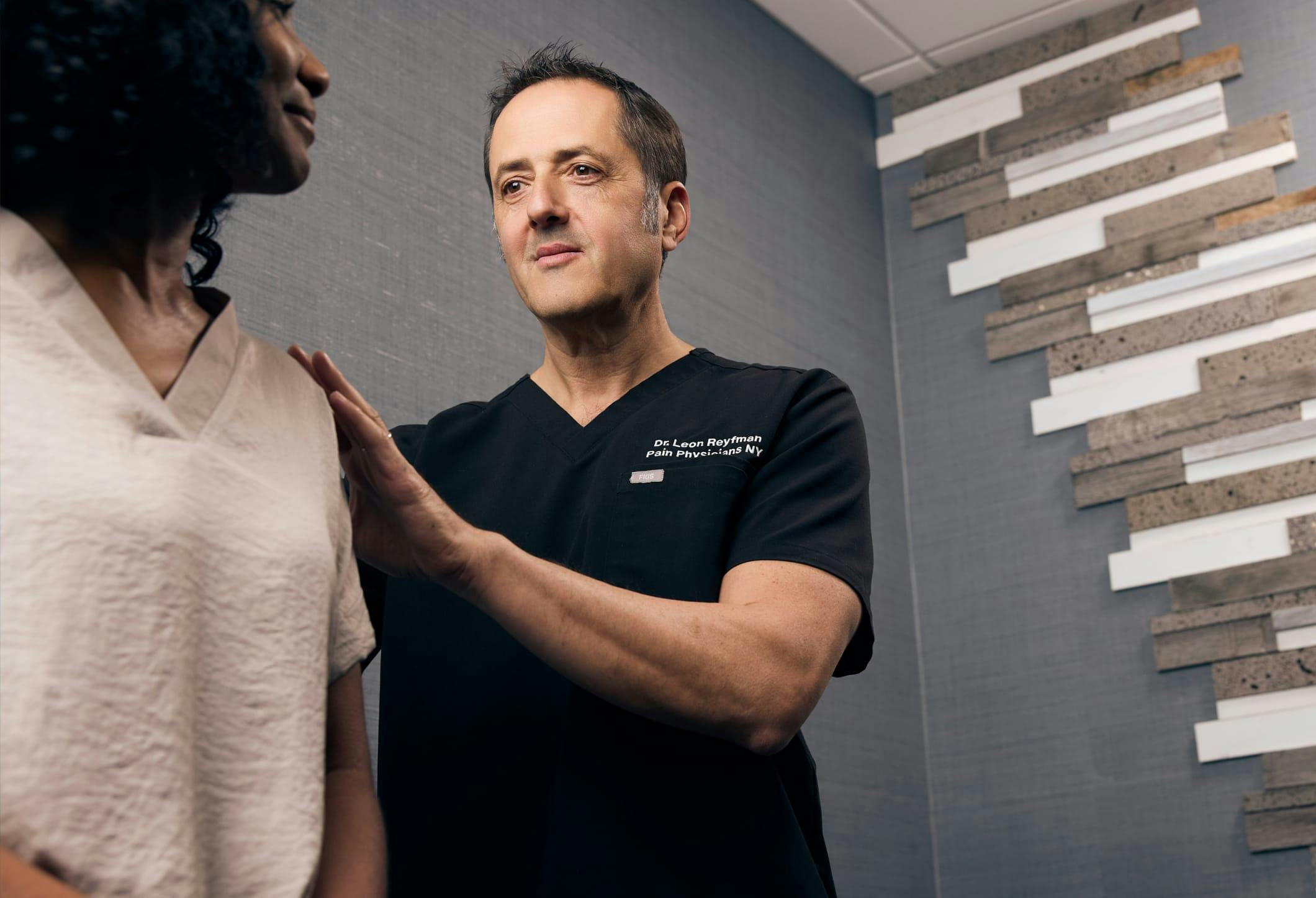
At Regen Axis Health, our board-certified physicians use platelet-rich plasma (PRP) to address joint, disc, and ligament pain at the biologic level. Led by Dr. Leon Reyfman, a fellowship-trained interventional pain specialist with academic appointments at Mount Sinai and SUNY Downstate, our team delivers PRP under image guidance at 16 locations in New York and New Jersey.

What Is PRP Therapy?

PRP is a concentrated form of your own blood. A small sample is drawn and then centrifuged to separate platelets and growth factors from the rest of the blood components. The resulting platelet-rich plasma is then injected into the area that needs healing.

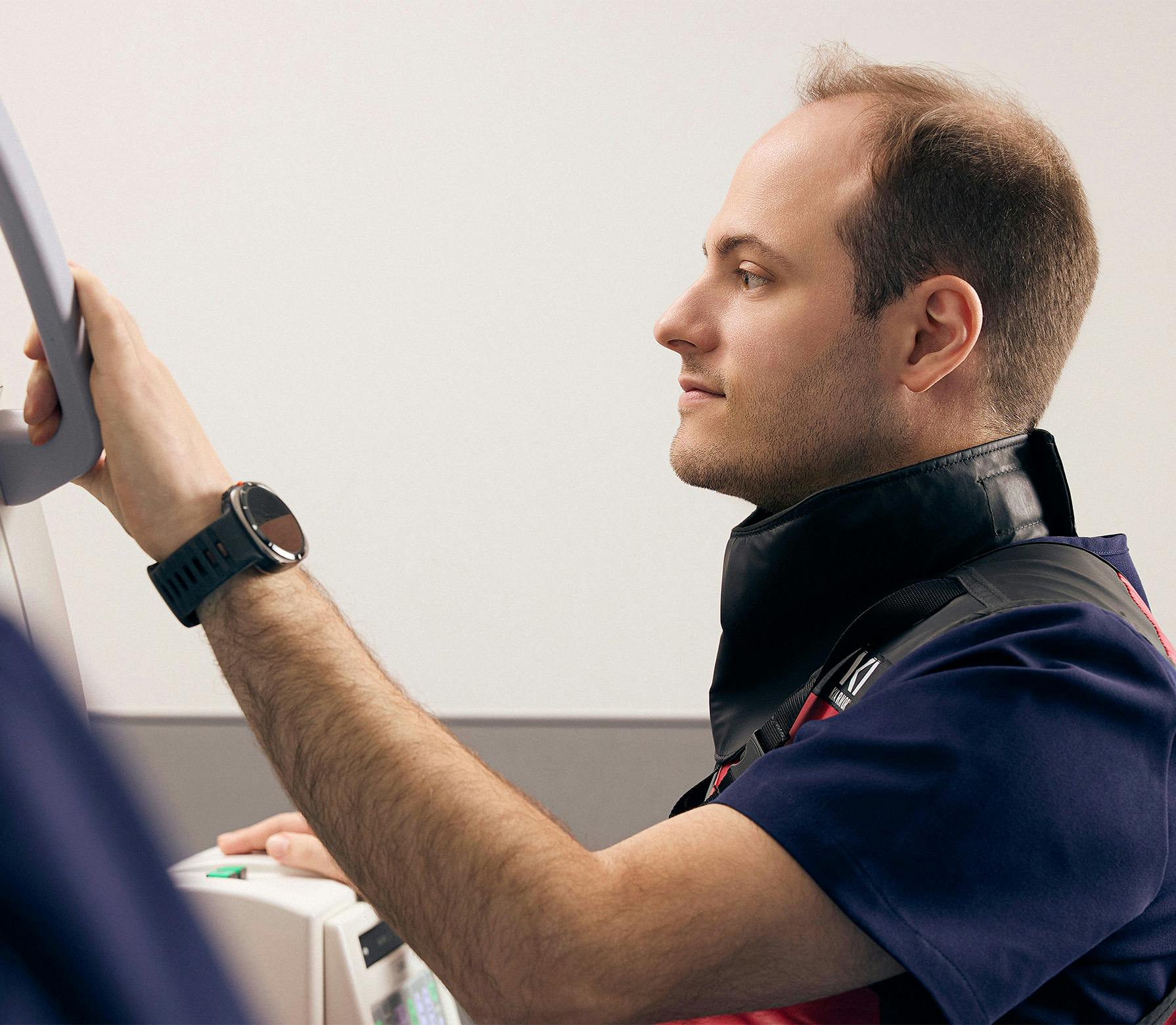
Platelets are best known for their role in clotting, but they also release dozens of growth factors that influence inflammation, tissue repair, and cellular signaling. When PRP is delivered into a damaged joint, a degenerated disc, or a weakened spinal ligament, those signals interact with local tissue and may support the body's own repair process. Every PRP procedure at Regen Axis Health uses ultrasound or fluoroscopic guidance for precision.

Banner media

PRP vs. Traditional Steroid Injections

Cortisone shots and other steroid injections suppress inflammation temporarily. They can mask pain, but they do not encourage healing, and with repeated use, steroids may accelerate cartilage and tendon degeneration.

PRP works differently. Rather than overriding inflammation, PRP supports the biological processes that resolve it. This regenerative-first approach is the core of how Dr. Reyfman and the Regen Axis Health team treat orthopedic and spinal pain.

doctor using a medical machine

How PRP Works Across Joints, Discs, and Spinal Ligaments

PRP is one of the most versatile regenerative tools available, with peer-reviewed support across multiple anatomical targets:

  • Joint applications. When PRP enters the joint space, growth factors interact with cartilage, synovial tissue, and surrounding structures. Clinical research has shown improvements in pain and function for patients with knee, hip, shoulder, elbow, and ankle osteoarthritis.
  • Spinal ligament support. Weakened or injured spinal ligaments, including the supraspinous and interspinous ligaments, can drive chronic back pain. PRP injected into these structures may help thicken and reinforce the connective tissue, reducing instability and the micro-motion that fuels pain.
  • Disc and facet joint applications. PRP is also used in intradiscal and facet joint procedures to support degenerated discs and inflamed spinal joints. Regen Axis Health offers these treatments as part of dedicated disc and spine programs.
  • Image-guided precision. Every injection at Regen Axis Health uses ultrasound or fluoroscopy to deliver PRP exactly where it is needed.

Conditions Treated With PRP at Regen Axis Health

PRP may be appropriate for patients dealing with chronic pain or degeneration that has not responded to conservative care, including knee, hip, shoulder, elbow, wrist, and ankle osteoarthritis; rotator cuff, tendon, and ligament injuries; post-injury joint pain; chronic low back pain related to spinal ligament laxity; facet joint pain and degenerative disc disease; and sacroiliac joint dysfunction.

Dr. Reyfman and his colleagues use diagnostic imaging and clinical evaluation to confirm whether PRP, alone or combined with other regenerative therapies, is the right path for each patient.

Banner media

Who Is a Candidate for PRP Treatment?


PRP is most appropriate for patients who have chronic joint, spine, or soft-tissue pain related to inflammation, injury, or degeneration; have not achieved lasting relief from conservative care; want to avoid steroid injections or postpone surgery; and are medically appropriate candidates for autologous biologic therapy.

A thorough evaluation at Regen Axis Health is required before treatment. Imaging, symptom history, and functional goals all shape the recommendations.

Contact us media

“Dr. Reyfman is great. Looked his office up through Google and have been going back ever since.”

Jenny Hall

Contact us media

The PRP Procedure at Regen Axis Health

PRP treatment is a same-day, outpatient procedure. The process typically begins with a small blood draw, similar to routine lab work. The sample is then run through a centrifuge to concentrate platelets and growth factors. From there, the prepared PRP is injected into the targeted joint, disc, ligament, or soft-tissue structure using ultrasound or fluoroscopic guidance. Brief post-procedure monitoring and recovery guidance follow.

Most patients return to light activity the same day. Walk-in and same-day appointments are available at Regen Axis Health locations across Manhattan, Brooklyn, Queens, the Bronx, Staten Island, Long Island, and New Jersey.

Same-day appointments. Walk-ins welcome. Relief starts now.

How PRP Therapy Is Performed at Regen Axis Health

At Regen Axis Health, PRP treatment for the joints and spine is physician-led and performed with precision. The process typically includes a blood draw to prepare PRP, image-guided injection into the joint space, and post-procedure guidance to support recovery.

When intraosseous treatment is included, additional imaging guidance is used to safely deliver PRP or BMAC into the targeted bone regions. All procedures are performed on an outpatient basis.

What to Expect After Treatment


Mild soreness, swelling, or stiffness at the injection site is common during the first few days. These symptoms typically resolve quickly.

Because PRP works by encouraging biological repair, meaningful improvement usually unfolds over weeks to months as inflammation decreases and tissue health improves. Activity modification and guided movement during early recovery help protect the treated area while it heals.

Background media

Combining PRP With Other Regenerative Therapies

PRP is often combined with other regenerative therapies at Regen Axis Health, including bone marrow aspirate concentrate (BMAC), adipose-derived cell therapy (MFAT), intraosseous injections, ozone therapy, regenerative laser, shockwave, and photomodulation.

This layered, physician-led approach allows our team to treat chronic pain from multiple angles, rather than relying on a single intervention

Results of PRP Treatment

Outcomes depend on the area treated, the severity of degeneration, and the individual healing response. Many patients experience reduced pain, improved function, and better tolerance for activity, often with continued improvement over several months as tissue continues to respond.

PRP is not a quick fix. It is a regenerative therapy designed to support durable healing rather than temporary symptom suppression.

Doctor media

Why Choose Regen Axis Health for PRP Therapy?

Dr. Leon Reyfman founded Regen Axis Health on a simple idea: medicine should restore the body's own healing capacity, not replace it. Board-certified in Anesthesiology and Pain Management, fellowship-trained at Columbia University, and an Attending Physician at Mount Sinai, Dr. Reyfman is supported by a team of board-certified physicians, including Dr. Dvoskin, Dr. Kosharskyy, Dr. Shulkin, Dr. Elbaz, Dr. Cohen, and Dr. Koutsospyros, with advanced training in image-guided joint and spinal procedures.

Every PRP treatment is performed by a physician, using ultrasound or fluoroscopy. Same-day appointments, walk-in availability, and 16 convenient locations across New York and New Jersey make accessing care simple.

Schedule a PRP consultation with Regen Axis Health today.

Frequently Asked Questions PRP for Joints & Spine

Is PRP the Same as a Steroid Injections?

No. PRP uses your own blood-derived platelets and growth factors to support healing. Steroid injections temporarily suppress inflammation without supporting tissue repair.

Can PRP Be Used in the Spine?

Yes. At Regen Axis Health, PRP is used not only in joints but also in spinal ligaments, facet joints, and, through dedicated disc procedures, within the intervertebral discs themselves.

How Long Does It Take to See Results From PRP?

Improvement is usually gradual. Many patients notice changes within several weeks, with continued progress over three to six months as the body responds to regenerative signaling.

Is PRP Safe?

When performed by one of our experienced, board-certified physicians using image guidance, PRP is considered safe for appropriately selected patients. Because PRP uses your own blood, the risk of allergic reaction is very low.

Can PRP Help Me Avoid Surgery?

In some cases, yes. By reducing pain and supporting tissue repair, PRP-based treatments may help delay or eliminate the need for joint replacement, spinal fusion, or other surgical procedures.

Contact us media
Accessibility: If you are vision-impaired or have some other impairment covered by the Americans with Disabilities Act or a similar law, and you wish to discuss potential accommodations related to using this website, please contact our Accessibility Manager at (212) 235-1599.
Contact Us