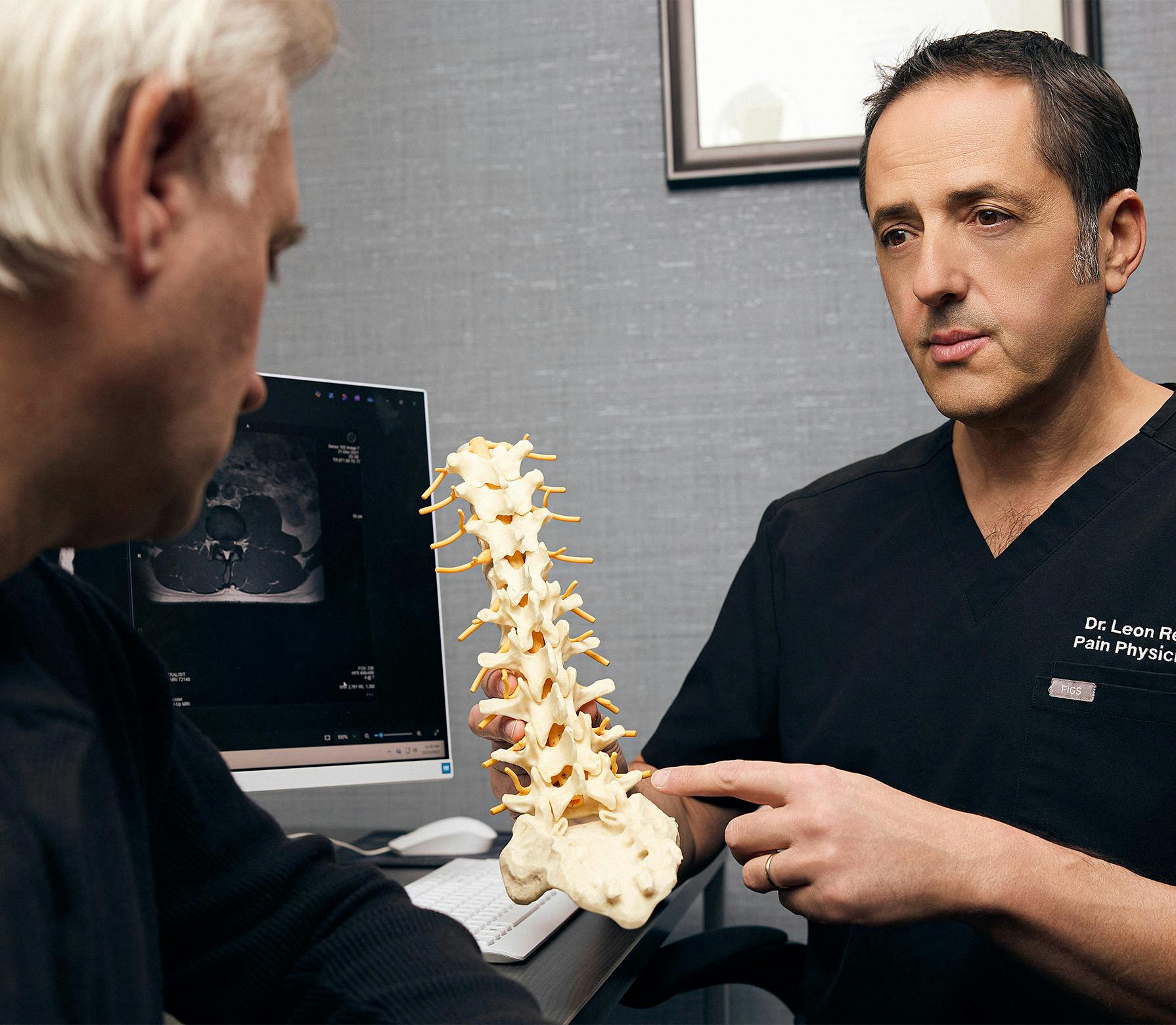
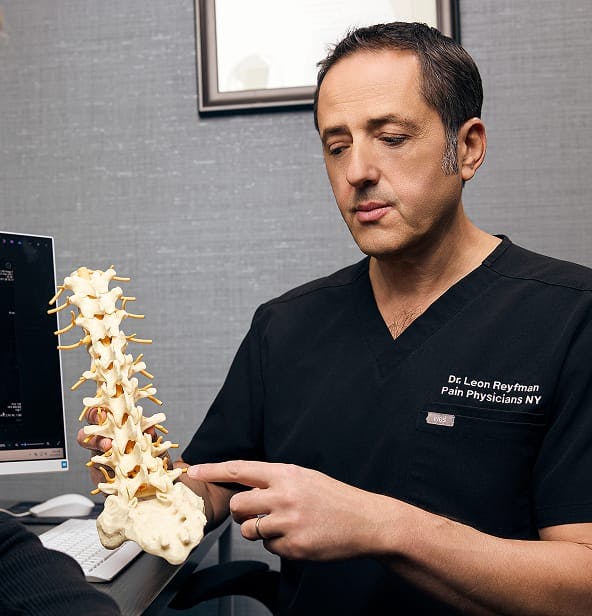
Degenerative disc disease can quietly erode comfort and mobility over time, turning everyday movements into persistent sources of pain that interfere with work, exercise, and quality of life.


Understanding Degenerative Disc Disease
Despite its name, degenerative disc disease is not truly a disease. It refers to age-related or stress-related changes in the spinal discs—the soft, shock-absorbing structures between vertebrae. Over time, discs can lose hydration, elasticity, and height, making them less effective at absorbing load and stabilizing the spine.
As discs deteriorate, they may develop small tears, bulge outward, or place additional strain on nearby joints and nerves. This process can occur in the cervical spine (neck), thoracic spine (upper back), or lumbar spine (lower back), with the lumbar region being most commonly affected.
At Regen Axis Health, we view degenerative disc disease as a mechanical and biologic problem that can often be addressed through regenerative strategies rather than aggressive surgical intervention.