Regenerative Care for Elbow Pain Caused by Overuse and Tendon Injury

Elbow pain is commonly caused by overuse injuries that affect the tendons responsible for gripping and wrist movement. Conditions such as tennis elbow and golfer’s elbow are especially common among active adults, professionals, and athletes. At Regen Axis Health, our board-certified physicians provide advanced elbow pain treatment using regenerative, non-surgical solutions designed to reduce inflammation, support tendon healing, and restore strength without prolonged downtime.

Schedule a consultation with Regen Axis Health to explore a targeted, regenerative approach to elbow pain.

Understanding Elbow Pain

The elbow is a hinge joint that connects the upper arm to the forearm and plays a central role in gripping, lifting, throwing, and rotational movements. It is stabilized by tendons, ligaments, and muscles that are highly susceptible to repetitive strain.

Elbow pain often develops gradually due to repeated stress rather than a single injury. Over time, microscopic tendon damage can accumulate, leading to chronic pain and reduced function. At Regen Axis Health, elbow pain is approached as a tendon-driven condition that often responds well to regenerative care when properly diagnosed.


Common Causes of Elbow Pain

Elbow pain may result from several underlying conditions, most commonly involving tendon degeneration or inflammation. Key causes include:

  • Tennis elbow (lateral epicondylitis), affecting the outer elbow and wrist extensor tendons
  • Golfer’s elbow (medial epicondylitis), affecting the inner elbow and wrist flexor tendons
  • Repetitive gripping or lifting, common in sports, manual labor, and desk-based work
  • Overhead or rotational activities, including racket sports and weight training
  • Poor movement mechanics, placing excessive load on the elbow tendons
  • Previous elbow injuries, which may predispose tendons to reinjury

Despite their names, tennis elbow and golfer’s elbow frequently affect people who do not play these sports. These conditions are more accurately described as tendinopathies rather than simple inflammation.

Banner media

Tennis Elbow and Golfer’s Elbow Explained

Tennis elbow involves degeneration of the tendons that attach to the outer portion of the elbow. Pain typically worsens with gripping, lifting, or wrist extension.

Golfer’s elbow affects the tendons on the inner side of the elbow and is often aggravated by wrist flexion or forearm rotation.

Both conditions develop when repetitive stress outpaces the tendon’s ability to heal. Over time, tendon fibers weaken, blood supply decreases, and pain becomes persistent.

Same-day appointments. Walk-ins welcome. Relief starts now.

Symptoms of Elbow Pain

Elbow pain symptoms vary based on the condition and severity but often include:

  • Localized pain on the inner or outer elbow
  • Pain that worsens with gripping, lifting, or twisting
  • Weak grip strength
  • Tenderness at specific tendon attachment points
  • Stiffness or discomfort after activity
  • Pain that lingers even at rest in chronic cases

If left untreated, symptoms may progress and interfere with work, sports, and daily activities.

Woman with her arms raised

How Elbow Pain Affects Daily Life

Elbow pain can make routine tasks such as typing, carrying bags, opening jars, or exercising uncomfortable. Many patients reduce activity to avoid pain, which can weaken surrounding muscles and prolong recovery.

Traditional care often focuses on rest, bracing, medications, or steroid injections. Regen Axis Health offers a regenerative alternative that focuses on restoring tendon health and function rather than temporarily suppressing symptoms.

How We Evaluate Elbow Pain

At Regen Axis Health, evaluation includes:

  • A detailed discussion of symptoms, activities, and repetitive stress patterns
  • A focused physical examination to identify tendon involvement
  • Review of imaging, such as ultrasound or MRI, when needed
  • Assessment of arm, wrist, and shoulder mechanics

This comprehensive approach allows us to confirm whether pain is coming from tendon degeneration, joint involvement, or nerve irritation.

Background media
Contact us media

“Since January of 2023, I have been a patient of Dr. Leon Reyfman, being treated for an extremely difficult and painful issue with my neck due to a workplace injury. Everything about everyone at any of their offices where I've been treated has been the best experience I've ever had at any doctor’s office.”

Anthony Gerena

Contact us media

Elbow Pain Treatments at Regen Axis Health

Regen Axis Health follows a regenerative-first clinical model. Our treatments are designed to support tendon healing, reduce inflammation, and restore strength without defaulting to surgery.

Platelet-Rich Plasma (PRP) for Elbow Pain

PRP therapy uses growth factors from your own blood to stimulate tendon repair. For elbow pain, PRP may be used to treat:

  • Tennis elbow involving the lateral epicondyle
  • Golfer’s elbow involving the medial epicondyle
  • Chronic tendon degeneration unresponsive to rest

PRP injections are image-guided and performed by board-certified physicians.

Regenerative Tendon and Soft Tissue Treatments

For persistent elbow pain, Regen Axis Health may recommend:

  • Targeted regenerative injections to damaged tendon tissue
  • Biologic treatments designed to improve tendon structure and strength
  • Ozone therapy in select cases to reduce inflammatory tendon environments

These treatments aim to restore tendon integrity and function.

Supportive Regenerative Therapies

To enhance healing and speed recovery, treatment plans may include:

  • Shockwave therapy to stimulate blood flow and tendon repair
  • Red light therapy and photomodulation to support cellular recovery
  • Regenerative laser therapy for targeted tissue support

These therapies are often combined with guided movement strategies to reduce reinjury risk.

What Results Can Patients Expect?

Regenerative elbow pain treatment focuses on gradual, meaningful improvement. Many patients experience reduced pain, improved grip strength, and greater tolerance for daily activities over several weeks to months. Outcomes depend on the severity of tendon damage, activity modification, and adherence to rehabilitation guidance. Our team monitors progress closely and adjusts care plans to support long-term tendon health.

Doctor media

Why Choose Regen Axis Health?

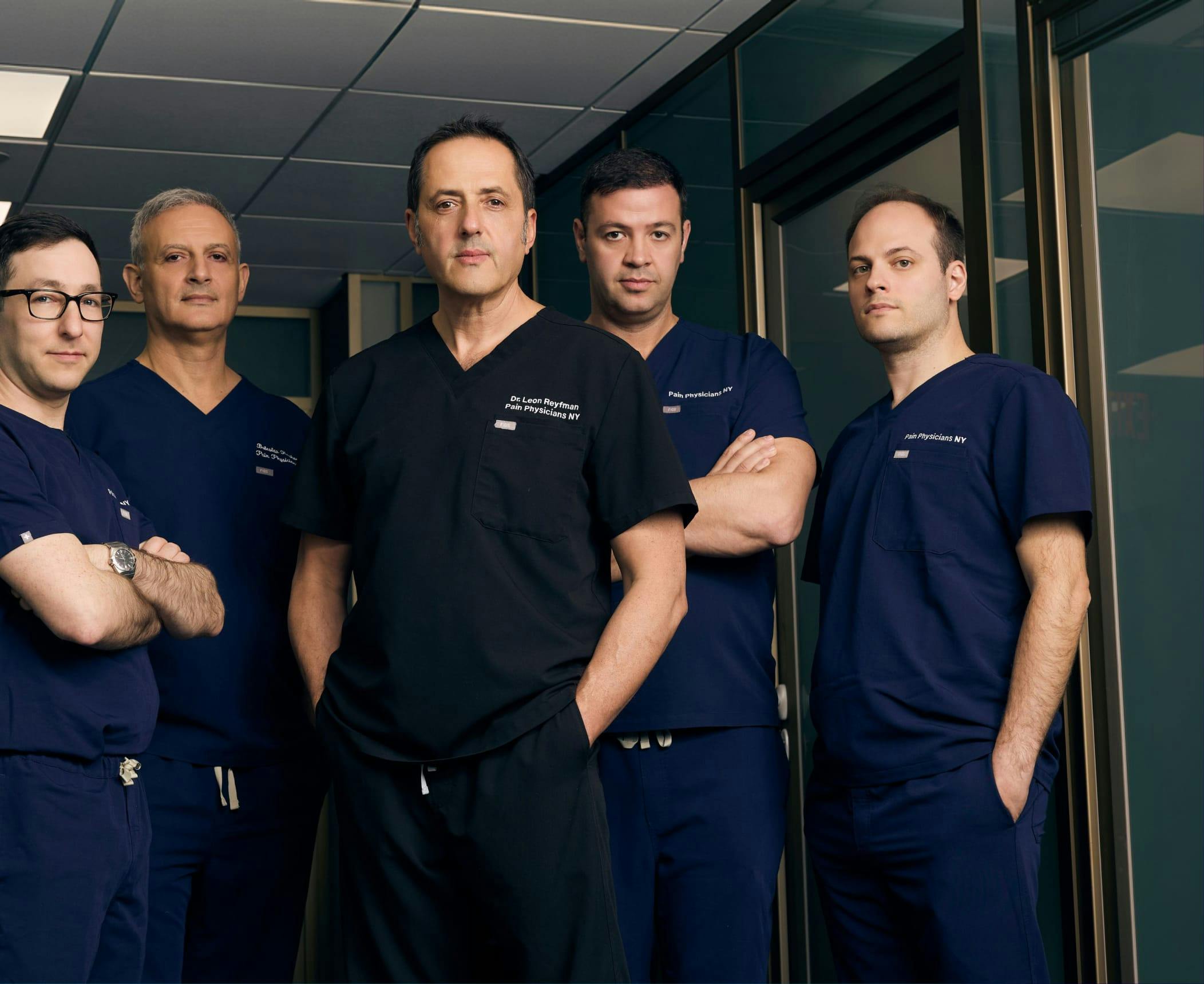
Regen Axis Health was founded by Dr. Leon Reyfman, an internationally recognized leader in interventional pain and regenerative musculoskeletal care, and is supported by a team of board-certified physicians with advanced training in tendon and joint conditions. Every treatment is physician-led and guided by a regenerative-first philosophy focused on healing tissue and restoring movement. With high-access scheduling across multiple locations, Regen Axis Health delivers advanced elbow pain treatment in NYC without the delays or limitations of traditional orthopedic care models.

Restore strength and comfort in your arm by scheduling a regenerative elbow evaluation with Regen Axis Health today.

Frequently Asked Questions Elbow Pain

Is tennis elbow the same as golfer’s elbow?

They are similar conditions affecting different tendon groups on opposite sides of the elbow.

Can elbow pain heal without surgery?

In many cases, yes. Regenerative, non-surgical treatments are often effective for chronic elbow pain.

How long does it take to recover from elbow tendon injuries?

Recovery varies, but many patients improve over weeks to months with appropriate care.

Are regenerative treatments painful?

Most procedures are well tolerated and performed with local anesthesia. Temporary soreness is common.

Can I continue working or exercising during treatment?

Activity is usually modified rather than stopped, with guidance provided to protect healing tendons.

Contact us media
Accessibility: If you are vision-impaired or have some other impairment covered by the Americans with Disabilities Act or a similar law, and you wish to discuss potential accommodations related to using this website, please contact our Accessibility Manager at (212) 235-1599.
Contact Us