A herniated disc can disrupt movement, compress nerves, and create persistent pain that radiates far beyond the spine, making even simple daily activities feel unpredictable and limiting.


Understanding Herniated Discs
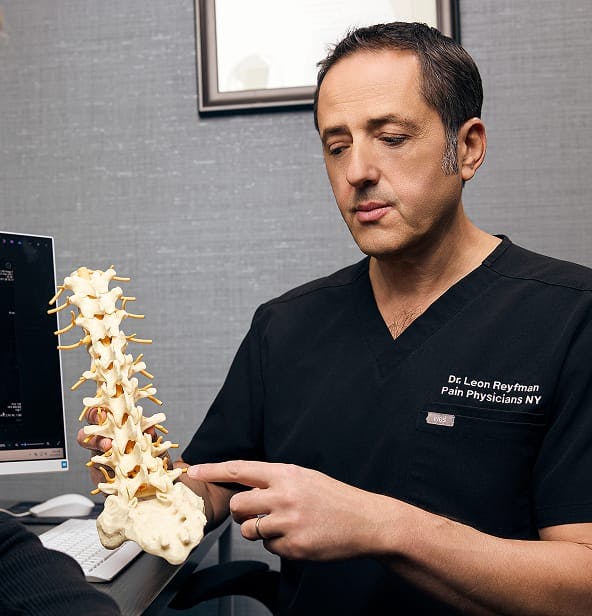
The spinal discs act as cushions between the vertebrae, absorbing shock and allowing smooth movement. Each disc has a soft, gel-like center surrounded by a tougher outer layer. A herniated disc occurs when the outer layer weakens or tears, allowing the inner material to push outward.
When this material presses on nearby nerves, it can cause pain, numbness, tingling, or weakness. Herniated discs can develop in the cervical spine (neck) or lumbar spine (lower back), with lumbar herniations being the most common.
At Regen Axis Health, we recognize that herniated discs are not simply "bulging structures" but biologic injuries that can often be managed without removing tissue or permanently altering spinal anatomy.