Targeting the Nerve Source of Sciatica With Regenerative Precision

Sciatica is most often caused by lumbar radiculopathy, a condition in which spinal nerve roots become irritated or compressed, leading to pain that radiates from the lower back into the leg. At Regen Axis Health, our board-certified physicians focus on identifying and treating the nerve source of sciatica using regenerative, non-surgical solutions. We provide advanced sciatica treatment for patients who want meaningful relief without relying on repeated steroids or rushing into surgery.

Schedule a consultation with Regen Axis Health to begin a nerve-focused, regenerative approach to sciatica.

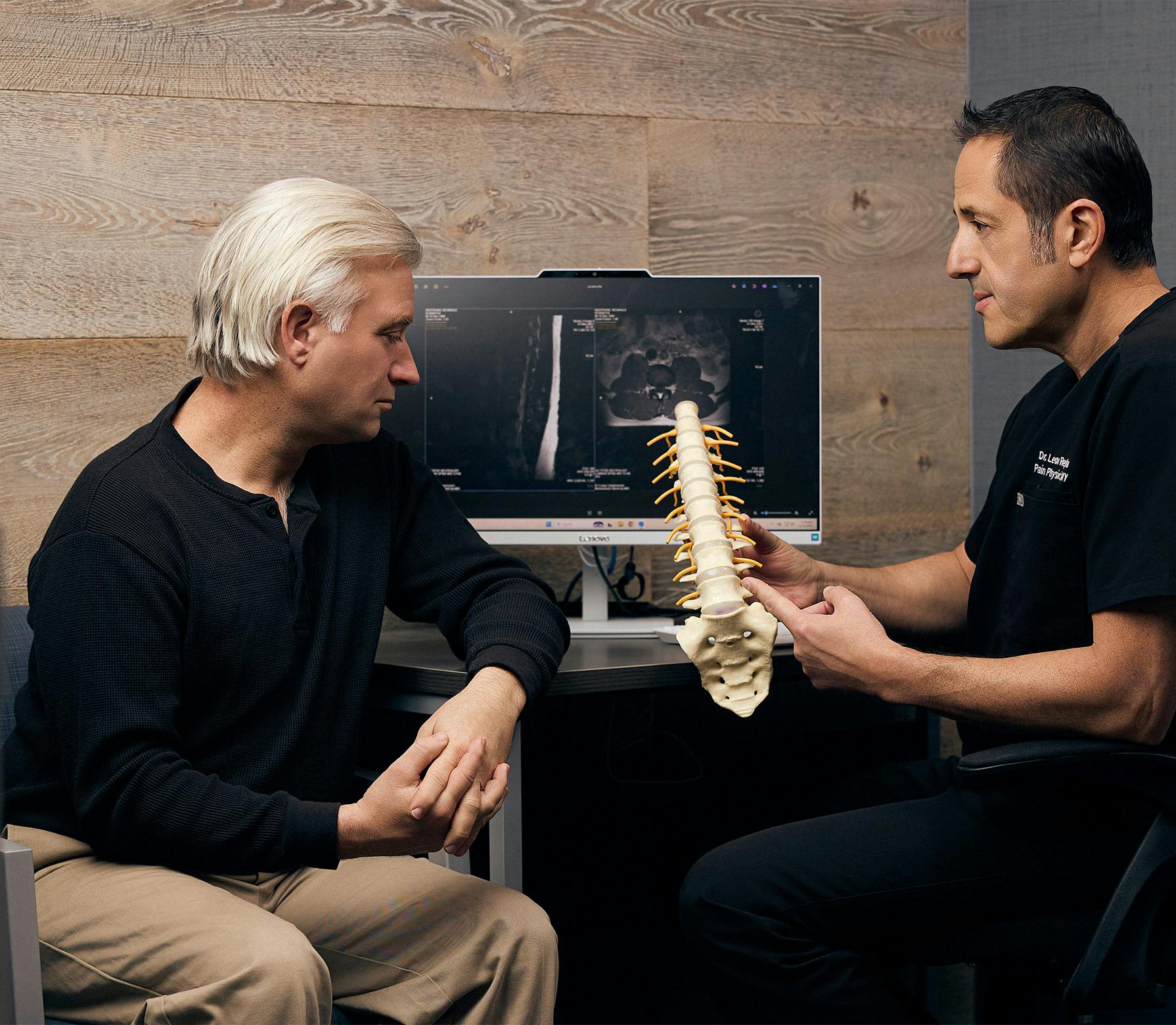
doctor showing a patient a model of a spine

Understanding Sciatica and Lumbar Radiculopathy

Sciatica is not a diagnosis on its own—it is a symptom pattern caused by lumbar radiculopathy, meaning irritation or compression of a spinal nerve root in the lower back. The sciatic nerve is the largest nerve in the body, formed by several nerve roots that exit the lumbar spine and travel through the hips, buttocks, and down each leg.

When one of these nerve roots is inflamed or compressed, pain signals can travel along the nerve pathway. This creates the classic sciatica pattern of pain that radiates downward, often accompanied by numbness, tingling, or weakness. At Regen Axis Health, sciatica care begins with treating radiculopathy at its source—not just chasing leg pain.


Causes of Sciatica (Lumbar Radiculopathy)

Sciatica most commonly develops when spinal structures place pressure on or inflame nerve roots. Common causes include:

  • Herniated or bulging discs that compress nerve roots
  • Degenerative disc disease, leading to disc collapse and nerve irritation
  • Spinal stenosis, where narrowing of nerve passageways restricts nerve movement
  • Facet joint degeneration, causing inflammation near nerve roots
  • Disc tears (annular tears) that release inflammatory material
  • Scar tissue or failed back surgery, which can tether or irritate nerves

In many patients, sciatica develops gradually rather than suddenly. Symptoms may worsen with sitting, bending, driving, or prolonged standing due to increased nerve tension.

Same-day appointments. Walk-ins welcome. Relief starts now.

Symptoms of Sciatica

Sciatica symptoms vary based on which nerve root is involved and the severity of irritation. Common symptoms include:

  • Pain radiating from the lower back into the buttock and leg
  • Burning, electric, or shooting pain along one side of the body
  • Numbness or tingling in the thigh, calf, or foot
  • Muscle weakness in the leg or foot
  • Pain that worsens with sitting, coughing, or bending
  • Difficulty standing or walking for extended periods

Unlike muscular pain, sciatica often follows a predictable nerve pathway and may fluctuate depending on posture and activity.

Woman with her arms raised

How Sciatica Affects Daily Life

Sciatica can make even basic activities uncomfortable. Sitting through meetings, driving, exercising, or sleeping may become difficult. Many patients begin limiting movement to avoid flare-ups, which can worsen deconditioning and prolong nerve irritation.

Traditional treatment paths often focus on medications, steroid injections, or surgery. Regen Axis Health offers a different approach—one designed to calm nerve inflammation, restore nerve mobility, and address the underlying spinal cause of radiculopathy.

Contact us media

“I really like Dr. R. He really listens to all my concerns and offers effective treatments. He truly knows how to take care of his patients.”

Meredith Barrett

Contact us media

How We Diagnose Sciatica at Regen Axis Health

Effective sciatica treatment requires pinpointing the exact cause of nerve irritation. At Regen Axis Health, evaluation includes:

  • A detailed review of symptoms and pain patterns
  • A focused neurologic and musculoskeletal examination
  • Review of MRI or other imaging to assess discs, joints, and nerve pathways
  • Assessment of posture, spinal mechanics, and movement tolerance

This thorough evaluation allows us to confirm lumbar radiculopathy and determine which spinal structures are responsible, guiding a targeted regenerative treatment plan.

Banner media

Sciatica Treatments at Regen Axis Health A Radiculopathy-Focused, Regenerative Approach

Regen Axis Health specializes in treating sciatica by addressing nerve root inflammation and compression, rather than masking symptoms. Our regenerative-first treatment options may include:

Epidural PRP for Lumbar Radiculopathy

Platelet-Rich Plasma (PRP) uses growth factors from your own blood to reduce inflammation and support tissue healing. For sciatica, epidural PRP may be used to:

  • Calm inflamed nerve roots
  • Reduce inflammatory signaling around the sciatic nerve
  • Promote a healthier nerve environment without steroids

This approach is image-guided and performed by board-certified physicians with advanced spine expertise.

Regenerative Disc Treatments

When disc pathology is the source of radiculopathy, treatment may include:

  • Intradiscal PRP to reduce disc inflammation and internal disruption
  • DiscSeel to address disc tears contributing to nerve irritation
  • Via Disc to support disc tissue health
  • Intradiscal ozone therapy to reduce disc-related inflammation
  • Laser-based disc reconstruction for targeted disc repair

These treatments aim to relieve pressure on nerve roots while preserving spinal structure.

Regenerative Nerve Treatments

For persistent nerve irritation, Regen Axis Health may recommend:

  • Nerve hydrodissection with PRP or platelet lysate to free compressed nerves and restore mobility
  • Targeted nerve blocks used selectively for diagnostic clarity or short-term relief

Unlike conventional approaches, regenerative nerve treatments are designed to support healing rather than temporary suppression.

Supportive Spine and Regenerative Therapies

To enhance recovery and reduce recurrence, treatment plans may also include:

  • Regenerative laser reconstruction
  • Shockwave therapy for associated muscular or soft tissue dysfunction
  • Red light therapy and photomodulation to support nerve and tissue recovery
  • Ozone therapy in carefully selected cases

Each plan is customized to the patient’s anatomy, activity level, and long-term goals.

What Results Can Patients Expect?

Regenerative sciatica treatment focuses on gradual, durable improvement. Many patients experience decreasing leg pain, improved walking tolerance, and better nerve-related symptoms over weeks to months as inflammation subsides and nerve function stabilizes.

Because radiculopathy is often multifactorial, progress is monitored closely and treatment plans are adjusted to support lasting results.

Doctor media

Why Choose Regen Axis Health?

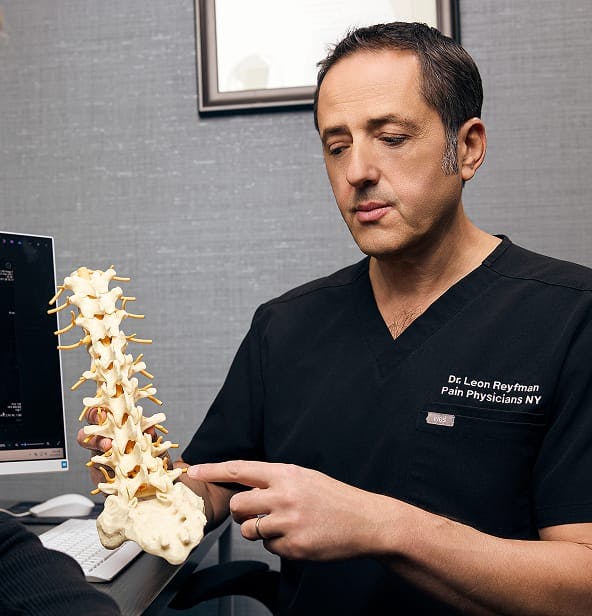
Regen Axis Health was founded by Dr. Leon Reyfman, an internationally recognized leader in interventional pain and regenerative spine medicine, and is supported by a team of board-certified physicians specializing in spine and nerve conditions. Every treatment is physician-led and guided by a regenerative-first model focused on resolving radiculopathy and preventing surgery. With high-access scheduling across multiple locations, Regen Axis Health delivers advanced sciatica treatment  without the delays or limitations of traditional care models.

Take control of nerve-driven pain by scheduling a radiculopathy-focused sciatica evaluation with Regen Axis Health today.

Frequently Asked Questions Sciatica

Is sciatica the same as radiculopathy?

Sciatica is a symptom pattern caused by lumbar radiculopathy, which refers to irritation or compression of spinal nerve roots in the lower back.

Can sciatica go away on its own?

Some cases improve with time, but persistent or worsening sciatica often requires targeted treatment to address nerve inflammation and compression.

Is surgery always necessary for sciatica?

No. Many patients achieve meaningful relief through regenerative, non-surgical treatments focused on the nerve source of pain.

How long does it take to see improvement with regenerative sciatica treatment?

Improvement is often gradual, with many patients noticing reduced leg pain and better mobility over several weeks to months.

Can I stay active while being treated for sciatica?

In most cases, activity is modified rather than eliminated. Your physician will guide you on safe movement to support nerve healing.

Contact us media
Accessibility: If you are vision-impaired or have some other impairment covered by the Americans with Disabilities Act or a similar law, and you wish to discuss potential accommodations related to using this website, please contact our Accessibility Manager at (212) 235-1599.
Contact Us