Persistent back or neck pain that radiates into the arms or legs often points to disc irritation that requires targeted, non-surgical care rather than repeated temporary relief.
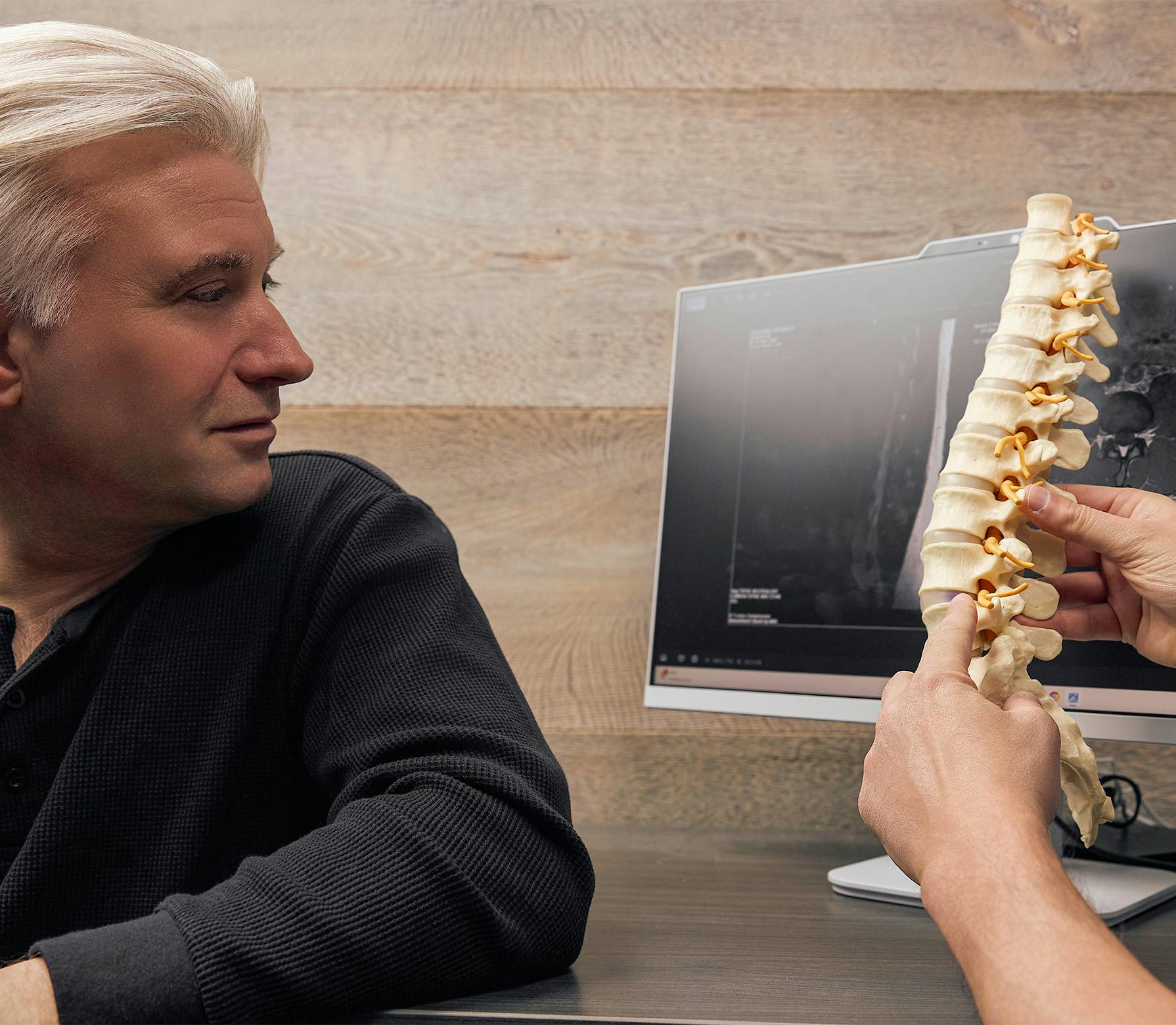


What Happens When a Disc Herniates?
Spinal discs act as shock absorbers between the vertebrae, allowing the spine to move smoothly. A herniated disc occurs when the inner gel-like portion of the disc pushes through its outer layer, potentially compressing or irritating nearby nerves.
Herniated discs most commonly occur in the cervical and lumbar spine.
Symptoms vary depending on the disc involved and the degree of nerve irritation, ranging from mild discomfort to significant pain, weakness, or sensory changes.