Advanced, Non-Surgical Care for Herniated Disc Pain

A herniated disc occurs when the soft inner portion of a spinal disc pushes through a weakened area of the outer layer, often irritating or compressing nearby nerves. This can lead to pain in the neck or back that radiates into the arms or legs. While surgery is sometimes recommended, many patients are candidates for non-surgical, regenerative care. At Regen Axis Health, our board-certified physicians provide advanced herniated disc treatment using precision-guided, regenerative approaches designed to reduce inflammation, relieve nerve pressure, and restore function. Schedule a consultation with Regen Axis Health to explore personalized, non-surgical options for herniated disc relief.

Understanding Herniated Discs

Spinal discs act as cushions between the vertebrae, allowing the spine to absorb shock and move smoothly. When the outer layer of a disc weakens or tears, the inner material can bulge or herniate outward. This herniated material may press on spinal nerves, triggering pain and neurologic symptoms.

Herniated discs most commonly occur in the cervical (neck) and lumbar (lower back) regions. Symptoms vary depending on the location and severity of nerve involvement. At Regen Axis Health, herniated discs are treated as both a structural and inflammatory condition, requiring targeted care rather than symptom-only management.

Banner media
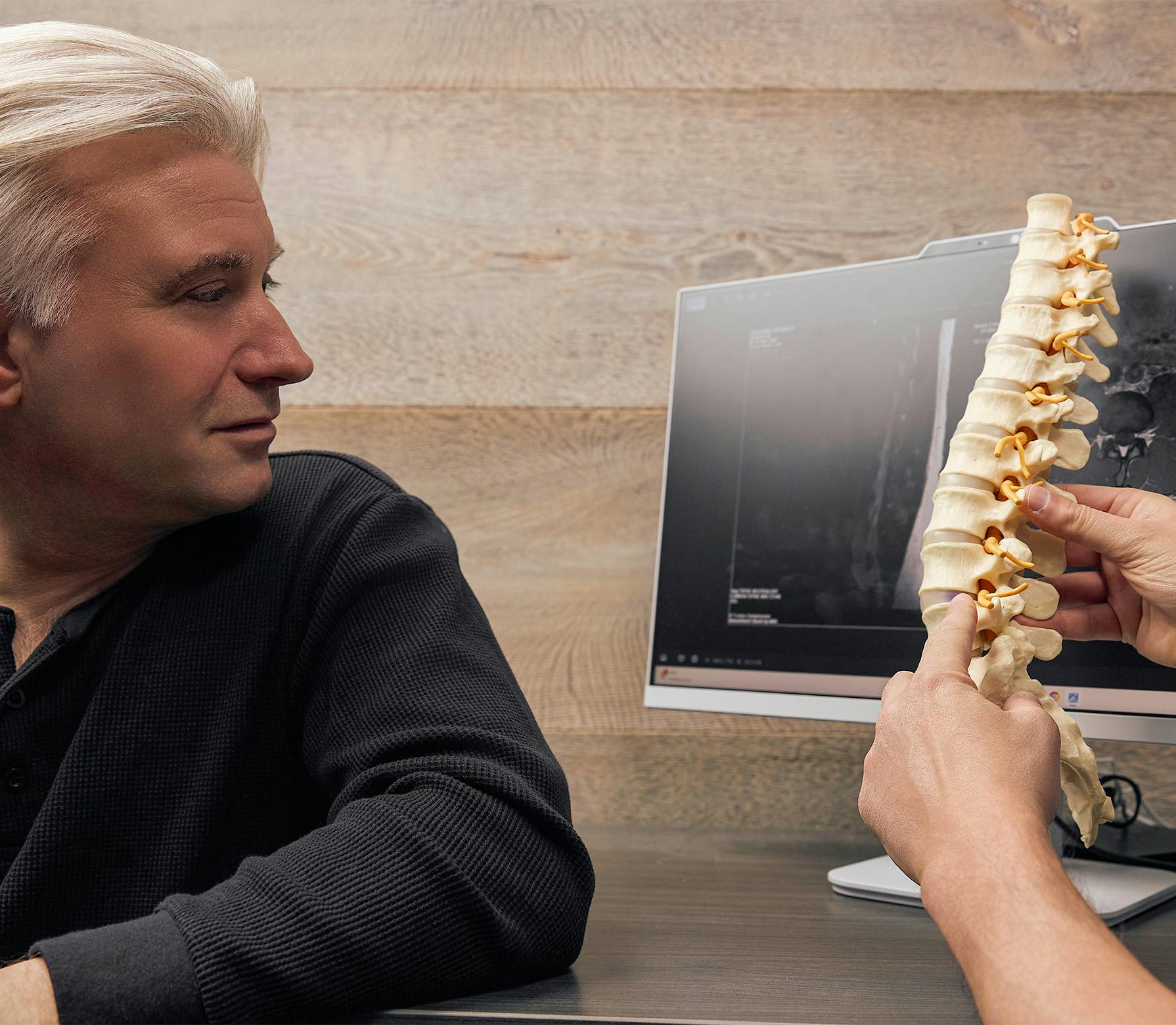
patient looking at a spine model

Causes of Herniated Discs

Herniated discs can develop from a combination of factors, including:

  • Age-related disc degeneration and dehydration
  • Repetitive strain or improper lifting mechanics
  • Sudden injury or trauma
  • Prolonged poor posture
  • Occupational or athletic stress on the spine

Over time, discs lose elasticity and resilience, making them more susceptible to herniation even with routine movements.

Symptoms of a Herniated Disc

Symptoms depend on the location of the herniation and the nerve affected. Common symptoms include:

  • Sharp or aching neck or back pain
  • Pain radiating into the arm or leg
  • Numbness or tingling in the extremities
  • Muscle weakness
  • Pain that worsens with movement, coughing, or sitting

Not all herniated discs cause symptoms, but when nerve compression occurs, timely evaluation is important to prevent progression.

How Herniated Discs Are Evaluated at Regen Axis Health

Accurate diagnosis is essential for effective treatment. At Regen Axis Health, evaluation includes a detailed review of symptoms and medical history, a focused neurologic and musculoskeletal examination, and review of imaging such as MRI to assess disc integrity and nerve involvement.

This comprehensive approach allows our physicians to determine whether symptoms are truly disc-driven and which non-surgical treatments are most appropriate.

Banner media
Contact us media

“I have been going to this pain management doctor for over nine years, and I highly recommend him to anyone who’s suffering with pain. He will find the best way to treat you and your painful areas. The doctors down to the staff are compassionate and concerned with you from check in to check out.”

Damian Rivera

Contact us media

Herniated Disc Treatments at Regen Axis Health

Regen Axis Health offers a range of herniated disc treatments designed to reduce inflammation, relieve nerve compression, and support healing without defaulting to surgery. Treatment plans are individualized based on disc location, severity, and patient goals.

Regenerative Injection-Based Treatments

Targeted injections may be used to calm inflammation and support recovery, including:

  • Epidural PRP or platelet lysate to reduce nerve root inflammation
  • Intradiscal PRP to support disc health from within
  • Nerve blocks to interrupt pain signaling and improve function

These treatments are image-guided and physician-performed for precision and safety.

Minimally Invasive Disc Procedures

For certain patients, minimally invasive disc procedures may be appropriate, such as:

  • Endoscopic laser discectomy to reduce disc material compressing nerves
  • Laser reconstruction to decompress inflamed disc tissue
  • DiscSeel to address annular tears contributing to disc leakage

These procedures are designed to relieve nerve pressure while preserving spinal structure.

Supportive Regenerative Therapies

Additional therapies may be incorporated to support healing and movement, including regenerative laser therapy, shockwave therapy, and photomodulation. These modalities help improve circulation, reduce inflammation, and support tissue recovery.

Results of Herniated Disc Treatment

Results of herniated disc treatment vary based on the size and location of the herniation, duration of symptoms, and overall spine health. Many patients experience reduced pain, improved mobility, and better tolerance for daily activities over time. Because regenerative approaches focus on healing and inflammation reduction rather than temporary symptom suppression, improvement may continue to develop gradually over several weeks to months following treatment.

Banner media
Doctor media

Why Choose Regen Axis Health?

Regen Axis Health is led by Dr. Leon Reyfman and a team of board-certified physicians with advanced training in interventional and regenerative spine care. Every treatment is physician-led and guided by a regenerative-first philosophy focused on relieving nerve pressure, restoring movement, and preventing unnecessary surgery.

Explore advanced herniated disc treatments by scheduling a spine evaluation with Regen Axis Health today.

Frequently Asked Questions Herniated Disc Treatment

Do all herniated discs require surgery?

No. Many herniated discs improve with non-surgical care. Regenerative and minimally invasive treatments may reduce pain and nerve irritation without surgery for appropriate candidates.

How long does it take to recover from herniated disc treatment?

Recovery timelines vary depending on the treatment used and severity of symptoms. Many patients notice gradual improvement over weeks to months.

Can a herniated disc heal on its own?

In some cases, symptoms improve as inflammation decreases. However, persistent or worsening symptoms should be evaluated to prevent long-term nerve damage.

Are regenerative treatments safe for herniated discs?

When performed by experienced, board-certified physicians using image guidance, regenerative treatments are considered safe and appropriate for selected patients.

How do I know which herniated disc treatment is right for me?

A comprehensive evaluation, including imaging and physical examination, is required to determine which herniated disc treatments best align with your condition and goals.

Contact us media
Accessibility: If you are vision-impaired or have some other impairment covered by the Americans with Disabilities Act or a similar law, and you wish to discuss potential accommodations related to using this website, please contact our Accessibility Manager at (212) 235-1599.
Contact Us